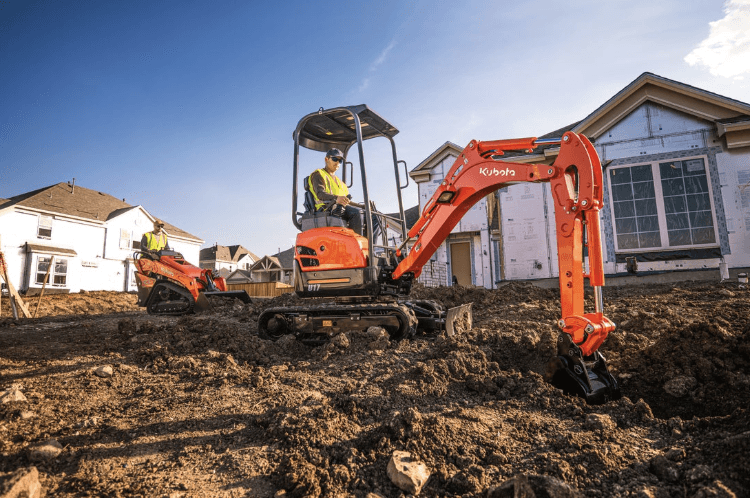




Summary: Section 179 lets a business deduct the cost of qualifying equipment in the year you buy it and start using it, instead of spreading the write-off over several years. For 2026, the federal limit is $2,560,000, and equipment has to be in service by December 31st to count. Mission Valley Tractor in San Jose can help you find the Kubota machine that fits your work, while your tax professional handles the numbers.
A new excavator or track loader is a big check for a small contracting business. Section 179 can turn part of that cost into a deduction on this year's federal return, which leaves more cash for payroll, fuel and the next job.
Federal and California rules don't match, though. Knowing both before you buy helps you plan the timing and set realistic expectations for each return.
Businesses usually recover the cost of equipment through depreciation, a deduction taken a little at a time over the machine's useful life. Section 179 lets a business choose to deduct all or part of that cost in the year the equipment is placed in service.
The choice is made on IRS Form 4562 with that year's return. Kubota notes that savings depend on each buyer's income and tax bracket, so the benefit varies from one business to the next.
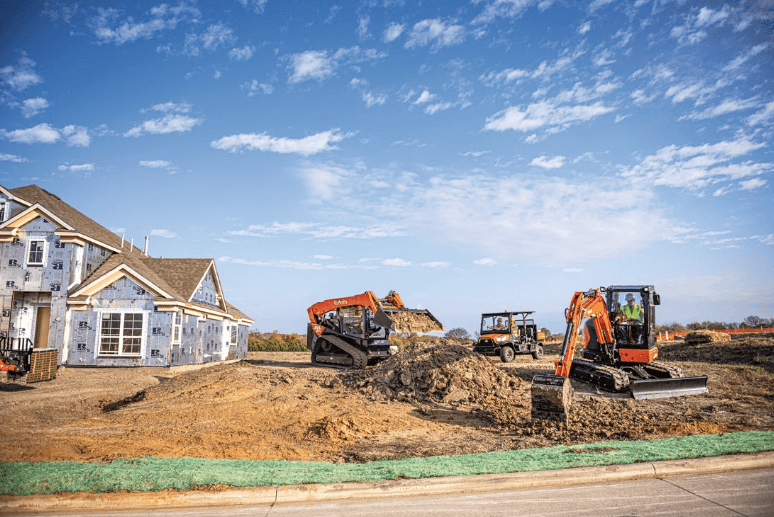
For tax years beginning in 2026, IRS Publication 946 caps the Section 179 deduction at $2,560,000. That cap shrinks dollar for dollar once a business puts more than $4,090,000 of qualifying equipment in service during the year.
There's an income limit too. The deduction can't be larger than the business's taxable income for the year, but any amount blocked by that rule carries forward to the following year.
The IRS adjusts both dollar figures every year.
Bonus depreciation is a second federal write-off, taken after any Section 179 deduction. Equipment acquired and placed in service after January 19, 2025, qualifies for 100% bonus depreciation, and it applies automatically unless the business elects out.
Used together, the two can cover the full cost of a purchase on the federal return in the first year. Your tax professional can tell you which mix makes sense for your business.
California taxes your business separately, and its limits are far lower. The Franchise Tax Board's current instructions cap the state Section 179 deduction at $25,000, and that cap starts shrinking once qualifying purchases pass $200,000 for the year.
California also doesn't follow the federal bonus depreciation rule. Cost above the state deduction is depreciated over several years on your California return, so state savings arrive more slowly than federal ones.
The state limit has held at $25,000 for years. The FTB still publishes new instructions each tax season, so confirm the current figure before you file.
Machinery and equipment bought for use in your business can qualify, including Kubota construction equipment. The IRS adds a few conditions:
Renting or leasing generally doesn't qualify, because the business doesn't own the machine. If business use later drops to 50% or less, part of the deduction may have to be added back as income.
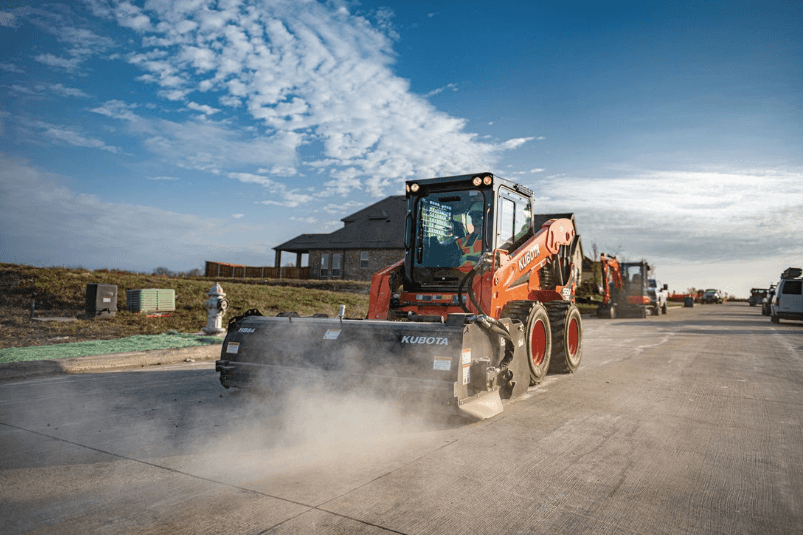
To count for 2026, equipment has to be placed in service by December 31st. The IRS treats a machine as placed in service once it's ready and available for its job, even if it hasn't dug a single trench yet.
A machine that's delivered but still waiting on setup may not count until that work is finished. Buying late in the year leaves less room for delays, so ask our team about timing on the model you want.
The deduction isn't tied to one brand. It can also apply to qualifying Toro equipment, Giant loaders, and the implements and trailers we sell.
Financed equipment still qualifies for Section 179, so a Kubota construction offer and the deduction can work together. Offer terms and end dates change, so check the current details before you buy.
We'll help you pick the right machine and check delivery timing before the year runs out. For the tax side, a qualified tax professional can walk through your specific situation, since savings depend on your income, tax bracket and state return.
Visit us at 780 E Brokaw Rd in San Jose, or give us a call at 669-338-1486. You can also send us your questions through the contact form below. We can't wait to see you!
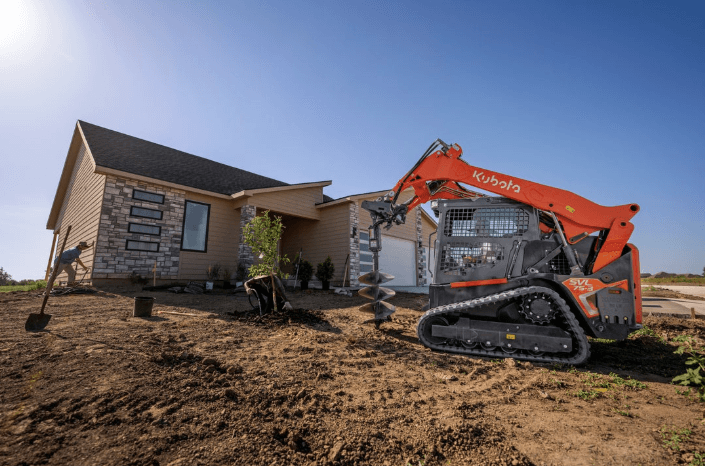
The Kubota construction lineup at our San Jose store covers everything from backyard digs to full site work. A few terms show up in the sections below:
Best for: utility trenching, foundations, drainage work and tight residential lots.
Kubota's excavators run from the K008-5, about 2,300 lb with tracks that retract to fit through most doorways, up to the KX080-5 at roughly 18,400 lb. The zero and tight tail swing U models keep the back of the machine close to the tracks as it rotates, which helps beside walls, fences and open traffic lanes.
Best for: grading, site prep and hauling material across dirt, mud or slopes.
The SVL lineup runs from about 68 HP up to 112.7 HP on the SVL110-3. Rubber tracks spread the machine's weight, so it keeps working on soft ground where tires would sink or spin.
SVL Models:
Best for: crews working on pavement and finished surfaces, or moving between job sites often.
The SSV65 pairs 64 HP with a 1,950-lb ROC, while the SSV75 steps up to 71.6 HP and a 2,690-lb ROC. Both have a hydraulic quick coupler, so attachments change at the flip of a switch without leaving the seat.
SSV Models:
Best for: loading trucks, moving base rock and gravel, and handling pallets with forks.
Standard buckets hold 0.5 cubic yards on the R430, 0.85 on the R540 and 1.0 on the R640. All three use a 2-speed hydrostatic transmission (no clutch to shift) and travel up to 12.4 mph, which speeds up trips across a large yard.
R Series Models:
Best for: landscapers and crews working in backyards and gated side yards.
The SCL1000 carries a 1,000-lb ROC and delivers 15 GPM to attachments from a 23.7 HP engine. Its wide tracks press down at just 4.0 psi (pounds per square inch), which helps protect finished lawns and landscaping.
SCL1000 Model:
Best for: owner-operators who want a loader, backhoe and tractor in one machine.
Engine output ranges from 23.3 HP on the B26 to 63 HP on the M62, with backhoe digging depth growing from about 8 feet to about 14 feet. The middle L47 lands at 47.1 HP and a little over 10 feet of digging depth.
TLB Models: